Java Exceptions
An Exception is an event (problem) that occurs during the execution of a program that disrupts the normal flow of instructions. Java provides a powerful mechanism to handle these runtime errors so that the normal flow of the application can be maintained.
The Hierarchy
All exception types are subclasses of the class Throwable.
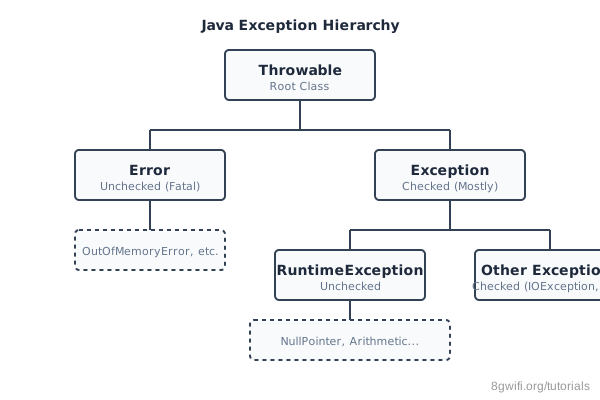
- Error: Serious problems that a reasonable application
should not try to catch (e.g.,
OutOfMemoryError). - Exception: Conditions that a reasonable application might want to catch.
Types of Exceptions
There are mainly two types of exceptions:
1. Checked Exceptions
Exceptions that are checked at compile-time. If some code within
a method throws a checked exception, then the method must either handle the
exception or it must specify the exception using throws keyword.
- Examples:
IOException,SQLException.
2. Unchecked Exceptions (Runtime Exceptions)
Exceptions that are not checked at compile-time. They usually occur due to programming errors.
- Examples:
NullPointerException,ArrayIndexOutOfBoundsException,ArithmeticException.
Enjoying these tutorials?